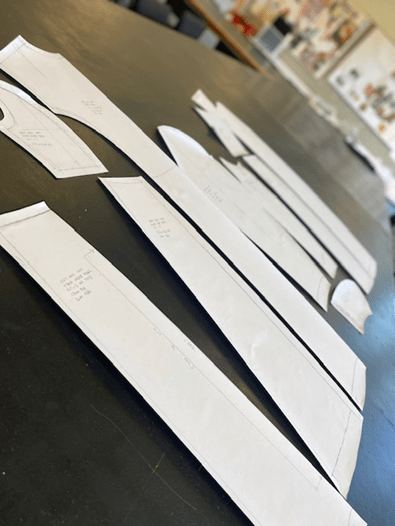
I commence the making process by taking a pattern from Barbara’s loaned garments. This involves weighing down the garments on top of pattern paper and tracing off the shapes using a bradawl;
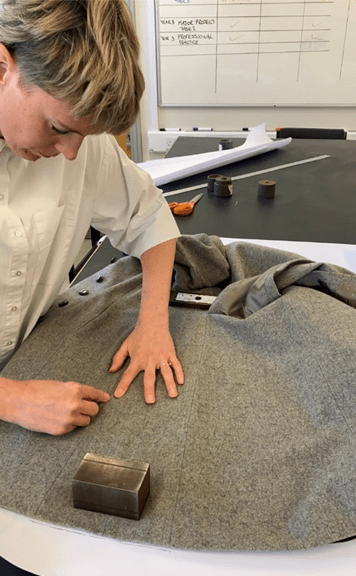
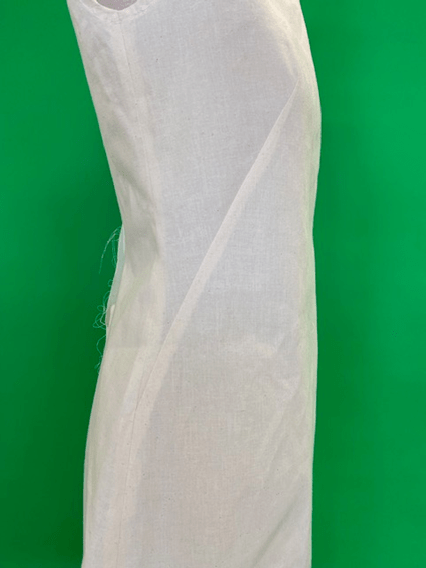
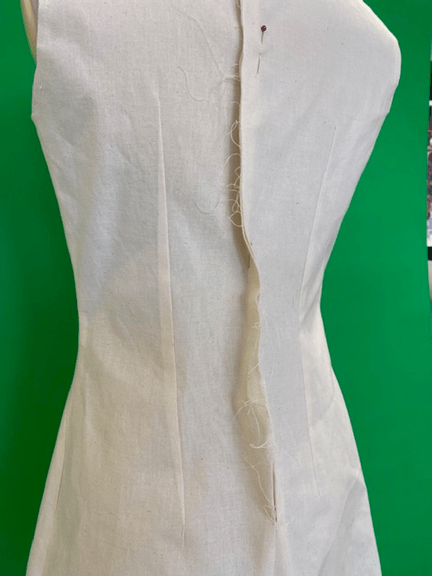
Despite having some experience of this technique, I encounter challenges. Specifically with the dress darts which are from the apex to the lower hip side seams. I hadn’t anticipated this to be so problematic as I have moved bodice darts into a ‘French’ dart position before. However, I struggle with moving the skirt waist dart tip into the side seam. I refer to my pattern cutting books (Aldridge and Campbell) and to online resources but they all fail to provide the answers. Following much experimentation I accept defeat and make the decision to unpick the dress at one side seam and through one dart to enable me to trace from the original cloth piece. Thankfully this results in a front dress pattern with accurate dart placement that reflects exactly the original garment. I carefully repair the dress to its original state.
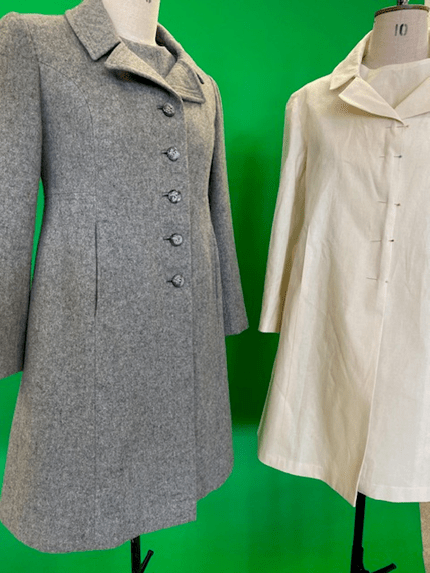
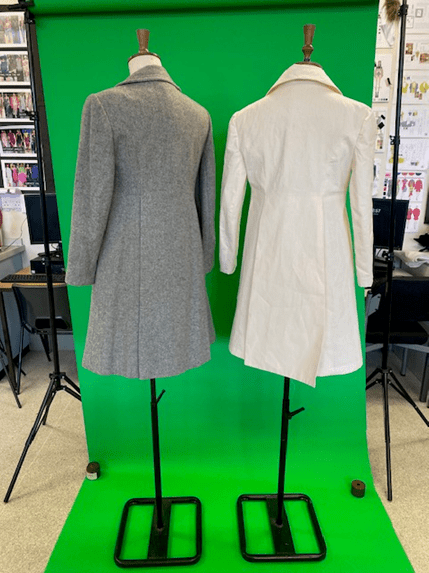
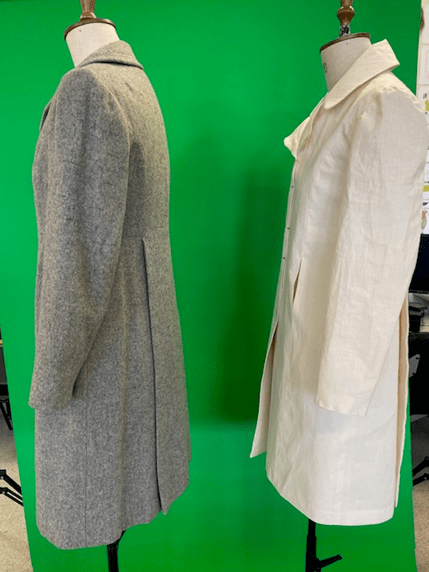
I repeat the technique with the coat, carefully tracing around the front, side body, back panels and the collar. My experience suggests that regardless of how much time is taken to produce sleeve patterns from existing garments, the end result never quite mimics the silhouette of the original. Having learnt from the earlier challenges with the dress dart, I make the decision to unpick the sleeve from the body of the coat to result in a pattern that truly reflects the exact fullness at the sleeve head and drape of the original.
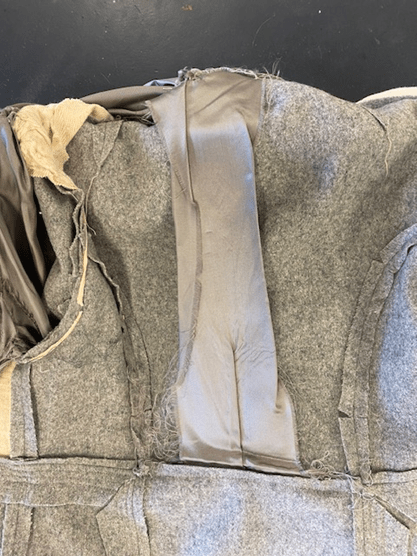
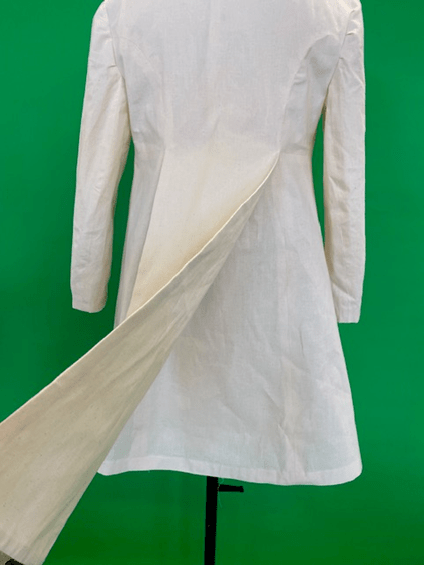
Through this process of turning the coat inside out I am able to analyse further the construction of the garment and am intrigued to discover that a strip of lining 10 cm wide has been attached from the inside waist seam into the neck to collar attach at the centre back. This must be to carry the weight of the centre back ‘flap’ detail on the outer coat and I make a note to include this in my final construction.
I am careful to toile in fabrics that reflect the properties and characteristics of the final outcome. This is a learnt technique that has come from experience of bridal wear. I learnt early on in my career that by toiling in calico when the end result is in fact destined to be made in a fabric that has entirely different characteristics such as chiffon or lace, often leads to fit complications later down the line. The materials used in Barabaras coat are 100% wool (a coating weight) and I make the decision that calico will suffice on this occasion, but to be aware to leave a little extra when fitting to allow for the density of the final cloth.
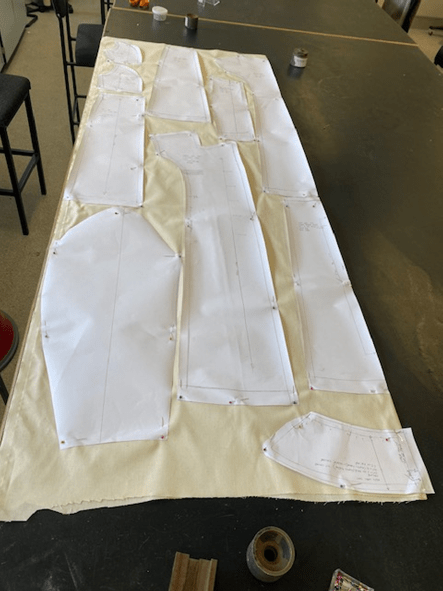
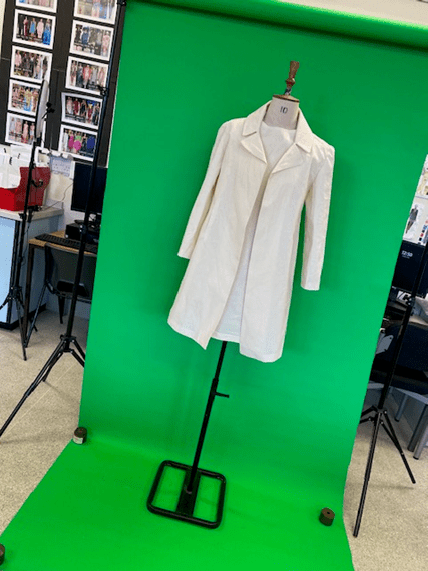
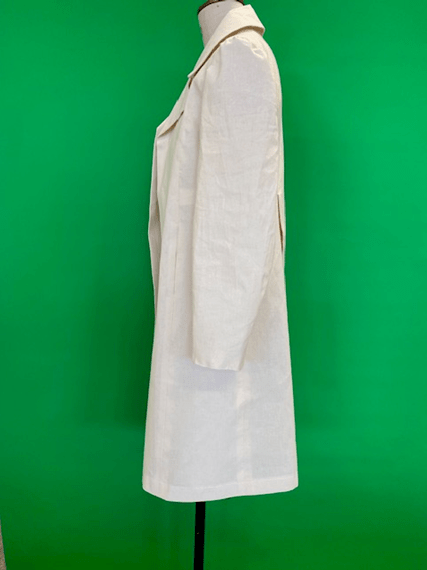
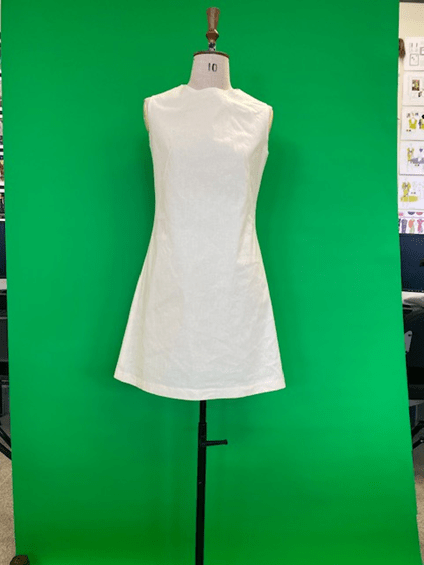
Following cutting of the dress and coat in calico I commence construction using industrial lock stitch sewing machines. These toiles are destined to be cut up and placed on an ‘elder’ mannequin and I consider how ‘finished’ the toiles should be. I am keen to raise my standards and produce outcomes that are professionally executed, however feel that lining, blind hemming, overlocking seams and inserting fastenings is unnecessary on this occasion. I am thrilled when the garments sew up with ease and require no pattern adaptations.

 Blog for Rebecca O'Leary (U2183040) MA in Creative Pattern Cutting