The module TMA1434 saw me adapting a mannequin to reflect the body measurements of Margaret. Now that I have made the decision to focus purely on Barbara’s outfit I must repeat the process and model a mannequin to her body measurement data and silhouette. Having gained earlier experience of ‘padding a mannequin’ I am able to produce the outcome much more efficiently than in my first attempt and, despite the measurements being slightly wide across the back and the nape to waist measure being long also, I am satisfied with the outcome as a starting block to support the task of draping pieces of the toiles onto the elder mannequin;
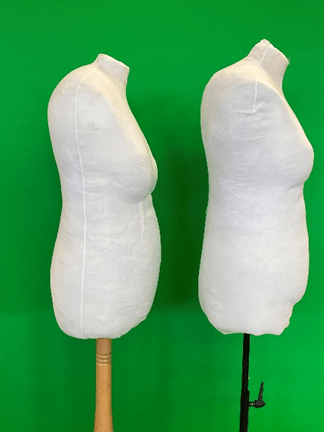
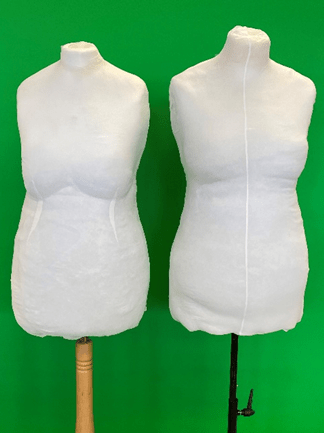
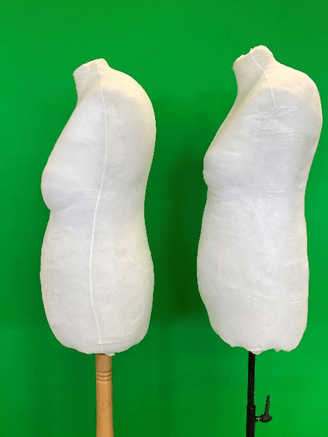
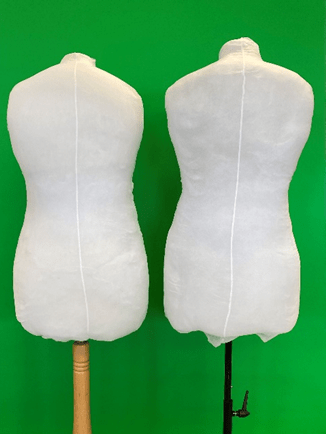
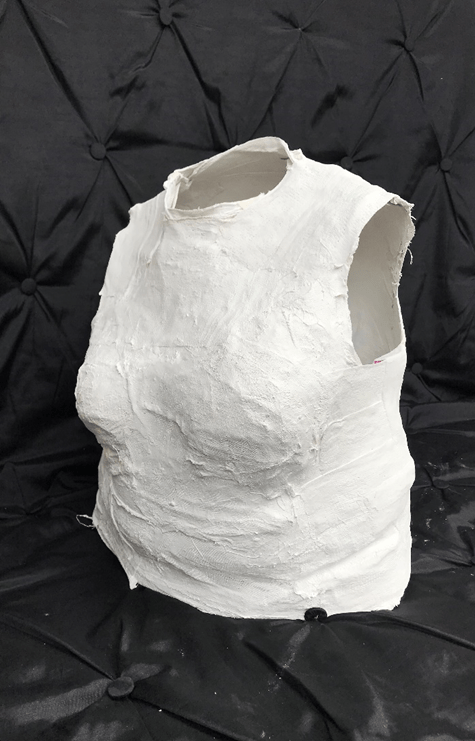
Using mannequins is never a true representation of a body and I am aware that Barbaras mannequin does not have the exact features of her silhouette and shape, however I do have the body cast from the module TMA1434 to cross reference the upper torso. I feel satisfied that with both of these tools available to me I can check the toiles for fit before seeing Barabara for her first garment fit in August.
Before I set too with slicing the dress toile and pinning on to the mannequin, I place the original toile on Barbara’s’ mannequin to assess where I might commence adapting the toile. I can see from this exploration that the dress requires additional girth around all pieces to allow the centre back to meet. But the area that I am most intrigued by is the upper back. I can see that the armhole is forced to sit forward and the lowered bust point on the mannequin results in the apex ‘standing off’ the body.
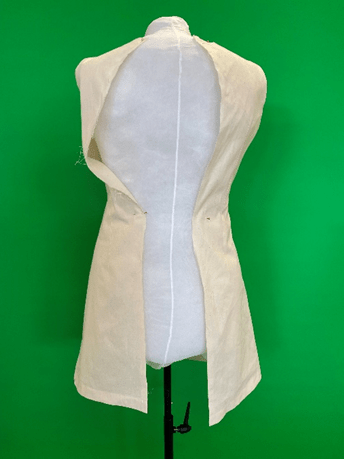
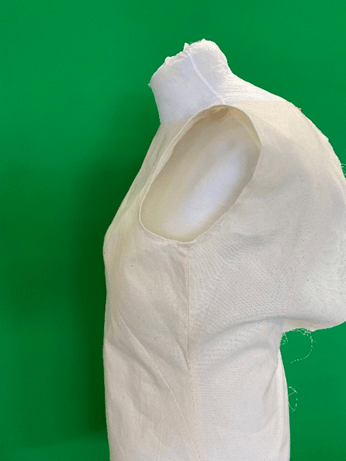
I consider the typical signs of ageing when finding solutions for fit before I commence using my scissors to slice the toile in different positions. For example the curved upper spine, lowered bust lines, reduced bust to waist measurement, loss of muscle mass/increased measurement at the upper arm and hip measurement.
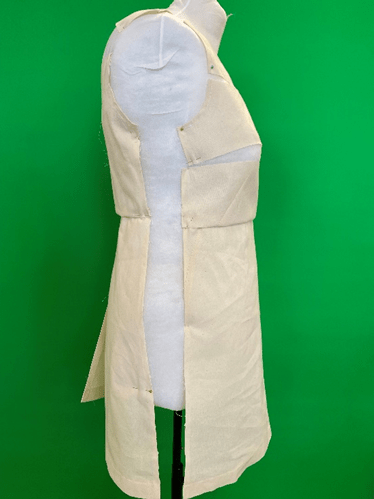
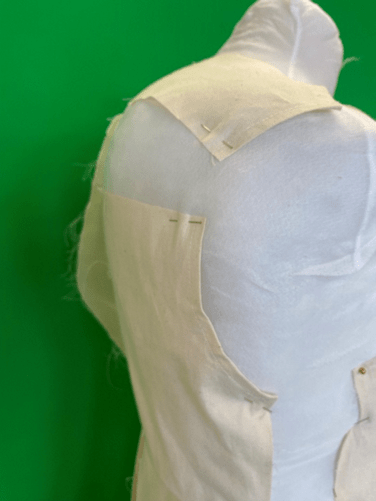
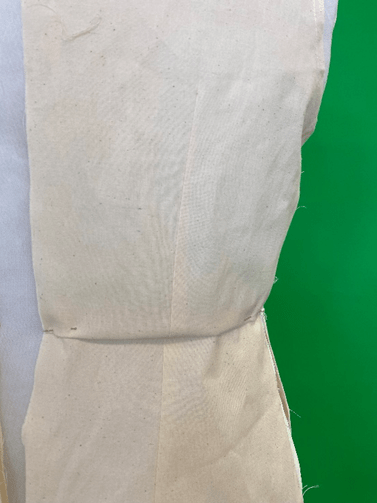
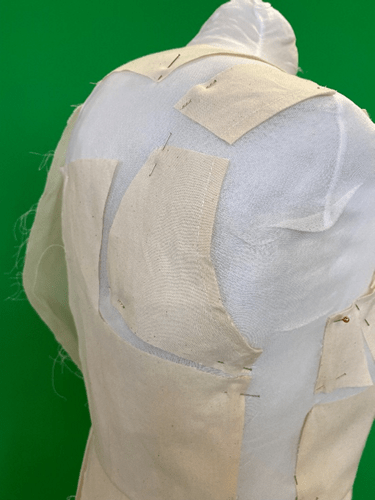
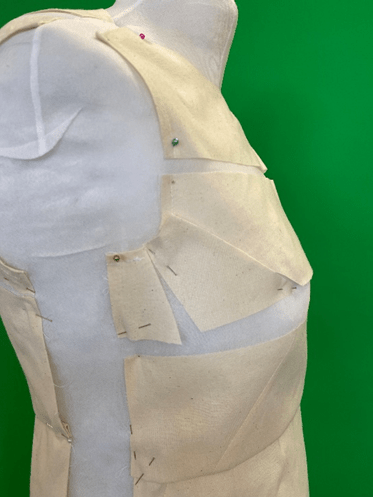
I go on to use moulage tape over the original grey dress to identify where I need to slice through my paper patterns;
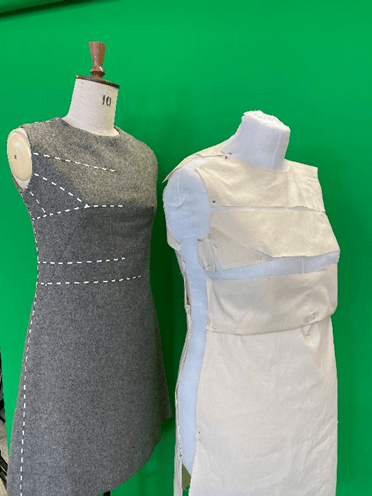
Being careful to obtain exact measurements I use a pen to write on to the toile the distance between calico pieces. It is essential that I am accurate with this data as this will provide the information I require to produce the patterns that will ‘fill the gaps’.
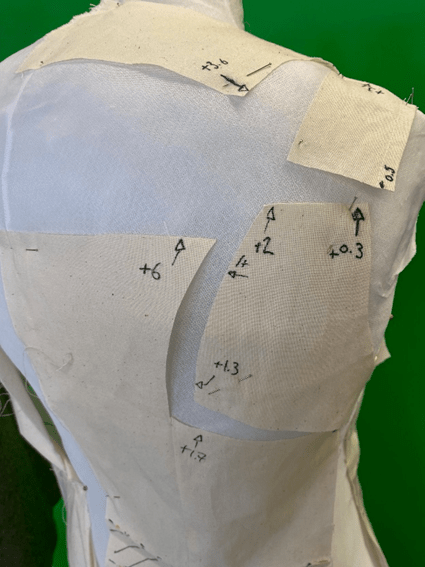
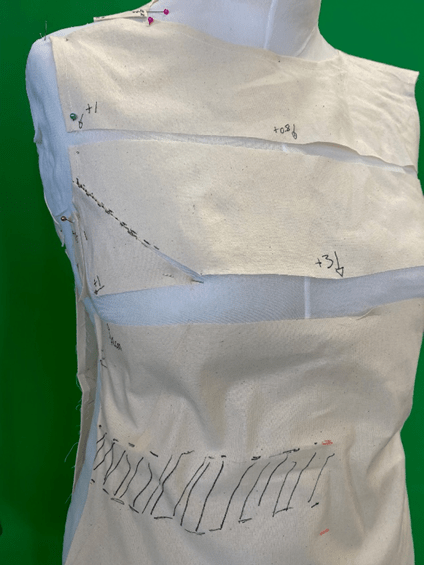
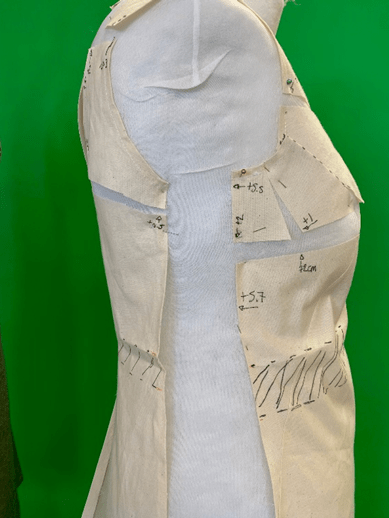
I rather enjoy the appearance of the scribbled measurements on the calico and contemplate if I can include photographs of the process in the final curation of the project.
Unpinning the calico pieces and tracing them on to pattern paper before adding seam allowances means that I now have a pattern of the original dress but with slices in appropriate positions. I can now generate the pieces that are required to adjust this pattern to fit Barabaras mannequin. I contemplate an appropriate solution for some time. The easiest way to reolise this ambition is to manufacture a dress in Barabars size by ‘grading up’ the original pattern. I can then over lay the dress pieces and top stitch into position. But this means that the darts and seams of the undergarment are visible inbetween the gaps. If I construct the lining ‘inside out’ then the final dress will require another lining to disguise the inner workings of the dress.
I decide to construct patterns in the shape of the ‘gaps’ inbetween and opt to cut these from a lining fabric. This will result in 1 x outer layer and 1 x lining layer as is standard. The reason for using this thinnner material as the ‘fillers’ is that the calico pieces can be brought together with less bulk in the negative space. I am hopeful that this output can be adaptable, that by using fastenings such as hook and eyes to close the pieces together, it will fit a size 10 ‘youthful’ figure and be undone to fit the ageing body.
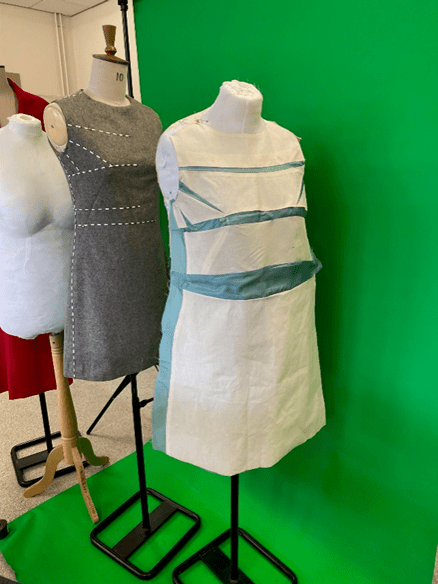
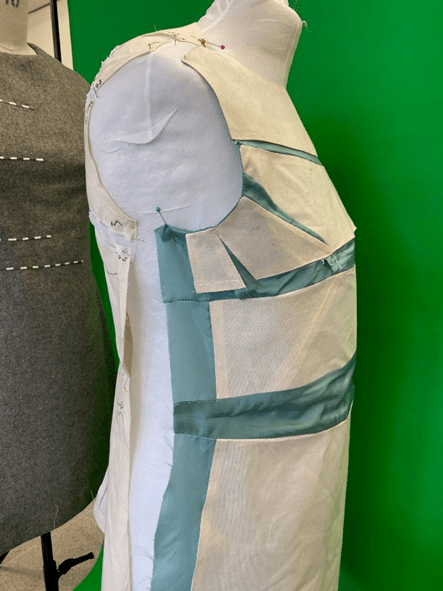
I recall my design research proposal and those early ambitions to draw attention to the ageing body rather than to disguise it and I am pleased with the effect of the outcome here and how the filler pieces draw attention to the ways in which the body has adapted over time. I make a note to be mindful of the colour of the filler pieces. Could this be a bright, impactful option to communicate the celebratory nature of this outcome? Using this as a marker of wisdom of our elders? To place the user at the heart of the decisions I decide to discuss this with Barbara at our next meeting.

 Blog for Rebecca O'Leary (U2183040) MA in Creative Pattern Cutting