A tutorial with Devabrata Paramanik in week 2 provides an opportunity to re-visit the portfolio of work submitted for TMA1431 Creative Studio. This research included analysis of participants ‘Going Away’ outfits, some of which had been safely kept as garments that held great sentimental value. Research participants had been married in the 60’s and 70’s and the work of Mary Quant had come to my attention through wider reading about the time. She was pivotal in the liberal freedom often associated with fashions of this period. I had conducted a 2D drawing exercise in which I drew out some of her most iconic outfits and sliced through them before repositioning on an ‘aged’ drawing body template to explore where garments would require adaptations.
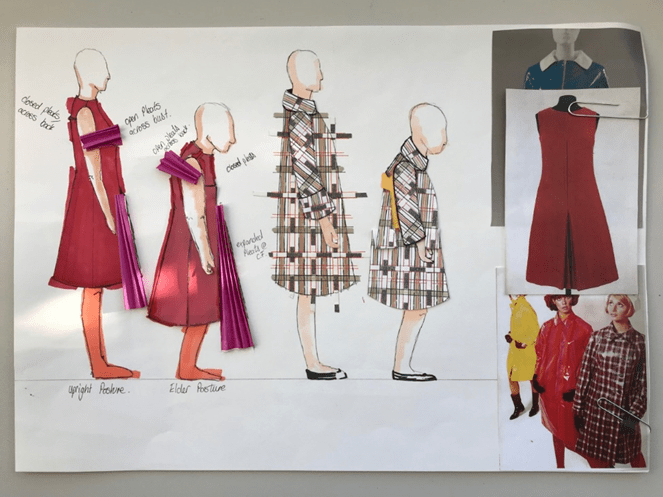
Despite me being focused upon developing pattern cutting techniques that would see garments adapt and grow with the female ageing body over time, I expressed to Dev a desire to produce an output that was aesthetically appealing to an audience in tune with the creative discipline of fashion.
Upon reflection of this discussion, I become aware of the way in which I was trying to verbally communicate the many ideas in my mind to Dev. The research journey has seen me travel in directions away from my initial research proposal – which is, in my experience, a natural outcome of such creative activity. However I felt muddled by the competing priorities that had emerged and those outlined within the earlier Research Proposal. Looking back at this tutorial, my explanation lacked clarity as I outwardly contemplated the main aims and objectives of this project, bouncing between earlier objectives and more recent ones!
Using this critical reflection to my advantage I must now revisit the objectives of the brief and pinpoint the overall aims. It is my intention that this narrowing down of ideas will encourage a more direct output.
‘Am I………’;
- Driven by research participants and the stories that emerged from the sentimental items in their wardrobes? Trying to recreate the fond memories?
- Inspired by the aesthetics of the 60’s Quant ‘look’?
- Developing a range that adapts with the wearer through the ageing process?
- Trying to recreate research participants outfits in a size that fits them now ie working for a client?
- Aiming to produce outcomes that are not driven by commercial fashion trends, but encourage a societal shift in opinions of ageing females within our culture? Ie an exhibition in an art gallery or similar?
- Attempting to ‘recreate’ the donated outfits from research participants by selecting exact replicas of material? Or sourcing materials that age well over time?
Dev raises some interesting points in our discussion and I make notes in my journal;
- How did it feel to be in the 60’s? With limited visual communication at the time, how do I obtain a true understanding of life at the time? Oral histories? Memory making.
- Material selection – move away from reproduction of the original garments and explore ‘smart’ fabrics that enhance comfort in the elderly (keeping fresh, sweat wicking, less laundering, medical purposes). Placing humanity at the centre of the decisions I make. Do I have the financial means to buy technical fabrics from scratch – would I be more successful if I chose to source fabrics that looked like the original items loaned?
- Design – ergonomic. Seam positioning? How do I develop products that are led by comfort for the wearer?
- Digital Avatars I had intended to explore – how might my elderly participants feel looking at their bodies digitally?
- Fabric costs are a concern – explore fabric sponsorship or approach Fashion Technicians to access the fabric store.
Next Steps;
Step 1;
Explore Fabrics and other materials that support comfort. In light of todays feedback and that within my project proposal in Dec ’21 (in which both module lecturers have passed comment upon technical fabric innovation), I make the decision to pursue this direction. To approach fabric mills, suppliers, garment manufacturers for sponsorship.
Step 2;
Revisit the aims and objectives of my brief. To focus upon Oral Histories, human connection with my participants, body ageing, adaptive fashion. To leave behind the Quant and Going Away outfit references and focus upon the items that participants own now.
Step 3;
How will I curate the final outcome now that I have decided to focus upon ‘making culture’ through questioning societal norms around female ageing. Research exhibition curation/layout for final presentation?

 Blog for Rebecca O'Leary (U2183040) MA in Creative Pattern Cutting